
Why the Spirit Foundation supports the Southern African Foundation for the Conservation of Coastal Birds (SANCCOB)

The Spirit Foundation is proud of its support for and partnership with SANCCOB, but perhaps not enough people know exactly what this remarkable organisation really does. So, let’s take a ‘deeper dive’.
The Work of SANCCOB
SANCCOB employs a multi-faceted approach to seabird conservation, managing emergency response, long-term monitoring and community outreach.
Over nearly six decades of action, SANCCOB has fundamentally shaped international protocols for oiled wildlife response and habitat management. For example, during the catastrophic MV Treasure oil spill in 2000, SANCCOB led a massive effort that successfully treated and washed over 19,000 oiled penguins, keeping the survival and wild re-adaptation rate exceptionally high. The organisation provides 24-hour emergency response for injured, sick, or oiled birds. Vet teams perform intricate surgeries, manage wound healing, and clear contamination through specialised pre-wash stabilisation and full washing protocols.
SANCCOBs chick bolstering project is a highly specialised initiative that rescues abandoned eggs and chicks, cares for them in incubation facilities, and releases hand-reared fledglings back into the wild. Over 8,000 chicks have been successfully released, and post-release tracking proves these hand-reared birds survive and breed at rates identical to wild-reared penguins. SANCCOB provided hand-reared chicks and logistics to establish a new penguin colony at the De Hoop Nature Reserve, successfully inducing breeding at a site that had been inactive for over 15 years.
Working alongside BirdLife South Africa, SANCCOB fought a landmark battle to enforce commercial fishing bans near major breeding colonies, securing critical protections via a Pretoria High Court settlement agreement to preserve foraging grounds.
SANCCOB trains and deploys Penguin and Seabird Rangers across five major breeding colonies: Robben Island, Simon’s Town, Stony Point, Dassen Island, and Bird Island. Rangers monitor local wild populations, collect scientific research data, and physically rescue abandoned eggs and chicks before terrestrial predators or weather events can claim them.
To monitor the long-term health of wild populations, SANCCOB implants penguins with Passive Integrated Transponder microchips. Ground readers tracking these transponders provide real-time data on survival, migration, and breeding attempts without human disturbance.
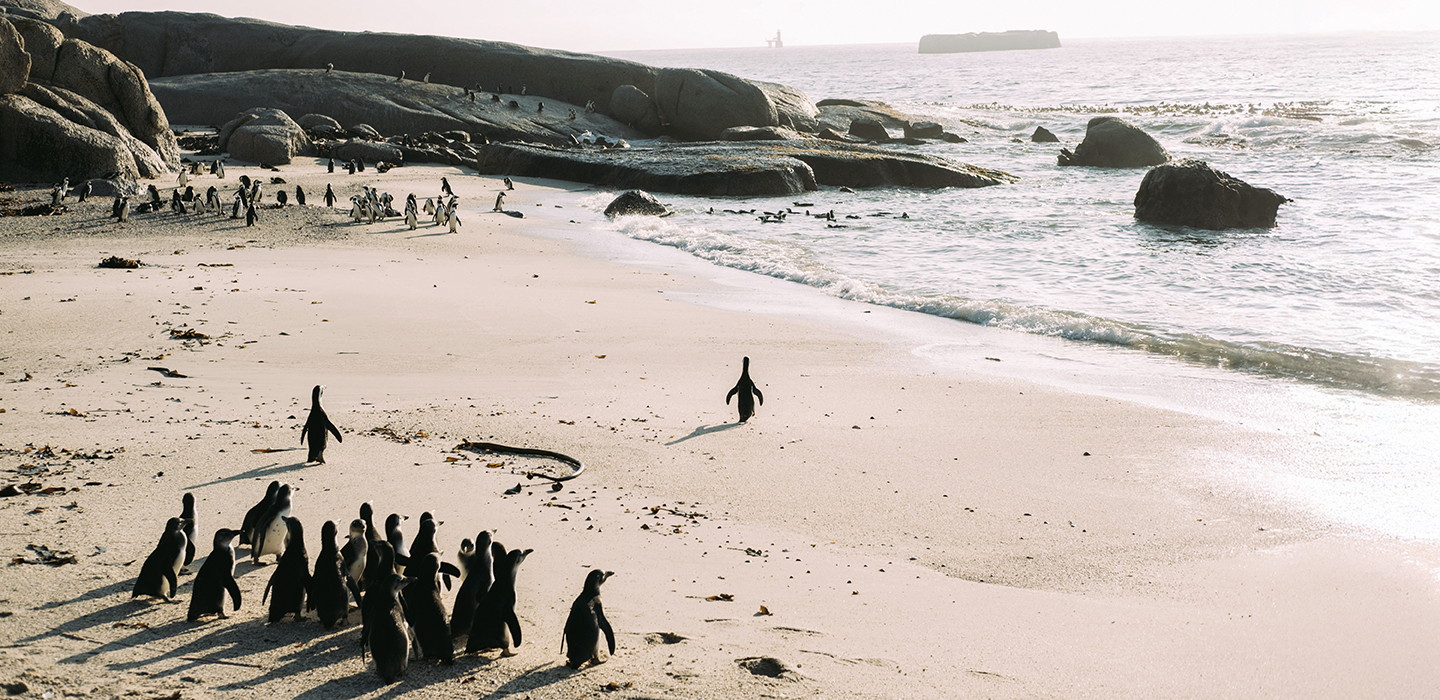
Through its funding of the warm water rehabilitation pool in particular, the Spirit Foundation has taken a particular interest in the threatened African Penguin. The African penguin is a keystones species, meaning its existence directly influences the health of regional marine ecosystems and local human economies.
African penguins act as the “canary in the coal mine” for the Benguela upwelling ecosystem. A plummeting penguin population flags serious hidden damage in wider oceanic health. The species is the cornerstone of South Africa’s coastal ecotourism. Colonies such as Simon’s Town (Boulders Beach) bring in hundreds of millions of Rands annually and support hundreds of jobs in tourism, hospitality, and transport.
Independent scientific reviews have confirmed that SANCCOB’s dedicated rehabilitation efforts have actively bolstered the wild penguin breeding population by an estimated 7%, effectively putting a brake on a rapid slide toward total extinction.
Despite incredible successes, SANCCOB faces a race against time, as the wild population of African penguins has dropped by over 55% in the last decade alone. The species was officially uplisted to critically endangered on the IUCN Red List, leaving them just one step away from extinction in the wild.
Without the persistent, round-the-clock intervention of SANCCOB and its conservation allies such as the Spirit Foundation, the iconic African penguin could be functionally extinct within a decade. Protecting them requires ongoing public funding, proactive governmental action on fishing parameters and international eco-tourism support.